
Before 2010, a family member searching for blood for a hospitalised relative in India had one effective option: call everyone they knew and hope someone knew a donor with the right blood type. It was slow, often unsuccessful, and entirely dependent on the size and health of their personal network.
Then came WhatsApp. Then came Facebook. Then came Twitter. And India's blood donation system began to transform in ways that no government policy, hospital directive, or awareness campaign had been able to achieve.
The change was not top-down or institutional. It was organic, grassroots, and driven by desperation. Families who could not find blood through hospitals broadcast urgent requests to WhatsApp groups. Those groups forwarded to other groups. A message sent to 50 contacts could reach 50,000 people within hours.
It saved lives. It also created problems. And it led to something better.
The phenomenon emerged gradually through the 2010s and accelerated after 2016 as smartphone penetration reached critical mass across India's urban and semi-urban populations.
A family receives notification from a doctor that their relative in surgery needs 4 units of O-negative blood urgently. The blood bank is short. They have 2 hours.
Someone in the family sends a message to their personal WhatsApp contacts. Then to a neighbourhood group. Then to a city group. Then to a "blood emergency" group that someone was added to years ago and forgot about. The message, forwarded dozens of times, eventually reaches a registered O-negative donor who was home, saw the message, and got to the blood bank in time.
This is real. It has happened thousands of times across India. The informal WhatsApp blood network is, by any reasonable measure, one of the most effective emergency health mobilisation tools India has ever produced — built entirely without any central planning.
The power of social media for blood donation is real. So are its limitations:
Unverified requests: WhatsApp messages can be fabricated. Blood banks have reported cases of fraudulent urgent blood requests — some used to solicit money from generous strangers, some for unclear motivations. Recipients of forwarded requests often cannot verify whether the hospital, the patient, or the blood need is genuine.
Middlemen and exploitation: A Medical Buyer analysis from 2025 identified this directly: "In urban areas, scarcity breeds opacity — middlemen often exploit scarcity by reselling blood at inflated prices, bypassing both donor screening and traceability." Some of these middlemen advertise on social media, intercepting desperate families and directing them away from legitimate blood banks.
No blood type verification: A WhatsApp message saying "urgent B+ blood needed" reaches everyone in a group, regardless of their blood type. The result: dozens of responses from people who are not B+, who need to be told individually that their type doesn't match, while the family simultaneously tries to find someone who is.
No donor health screening: Someone who responds to a WhatsApp blood appeal may be ineligible to donate — recent illness, medication, prior donation too recently. There is no pre-screening before the social media response; blood banks must manage this when the responder arrives, sometimes after travel.
Information overload and fatigue: When the same person's WhatsApp groups regularly fill with urgent blood appeals — real and forwarded — message fatigue sets in. People stop responding, or start ignoring messages they cannot verify.
Violation of donor privacy: "My friend Rahul at XYZ hospital urgently needs B+ blood" shared across thousands of contacts involves the patient's personal information without their explicit consent.
Twitter (now X) and Facebook extended the reach of blood appeals beyond personal networks. Blood donation NGOs established social media presences that attracted thousands of followers willing to be contacted for urgent blood requests. Pages with names like "Blood Donors India," city-specific blood group pages, and NGO accounts built real communities of responsive voluntary donors.
During the COVID-19 pandemic, when physical camps were impossible, these social media communities became the only functioning voluntary donor mobilisation system in many cities. Blood banks that had maintained social media channels could broadcast urgent needs to engaged audiences. Those without digital reach were largely isolated from their donor bases.
The Karnataka blood centre COVID study identified social media as the primary successful tool for donor mobilisation during the pandemic — specifically recommending that all blood banks develop and maintain social media presence for exactly this kind of emergency communication.
The problems with informal social media blood donation — unverified requests, unscreened donors, middlemen, privacy violations — have progressively driven the development of verified, platform-based blood donation systems.
Informal social media request: Message forwarded across WhatsApp groups, unverified, reaches random people of all blood types, no accountability.
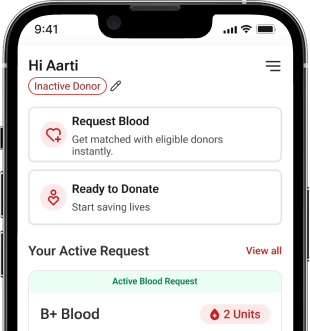
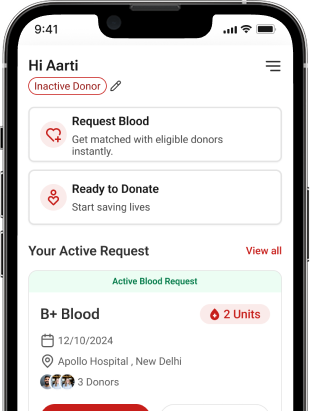
Platform-based request (TheBloodApp): Urgent request submitted by verified hospital or family member, goes only to registered donors with the matching blood type in the specified geographic area, donors have pre-registered their blood type and health status, platform provides accountability and tracking.
The platform approach preserves what worked about social media — speed, reach, individual donor mobilisation — while adding the verification, blood type filtering, and accountability that informal forwarding cannot provide.
This is why TheBloodApp exists. It is, in a real sense, what WhatsApp blood groups were trying to be — but built with the architecture that blood banking actually requires.
Despite the limitations of informal approaches, social media done well can be genuinely powerful. The most effective blood donation social media use in India has these characteristics:
Verified accounts: Blood banks and NGOs maintain social media presences with verified institutional identity, so followers know the requests are genuine.
Blood type specificity: Good urgent appeals specify blood type, component (whole blood, platelets, plasma), hospital, city, and a contact number — giving potential donors the information they need to assess whether they can help.
Platform integration: The most effective NGOs use social media to drive traffic to registration platforms, not just individual urgent responses. "If you want to respond to future appeals like this one, register on TheBloodApp" converts a single social media moment into a sustained donor relationship.
Myth-busting content: Between urgent appeals, effective blood donation social media accounts build audience trust through educational content — correcting myths, sharing donor stories, celebrating milestones. This maintains engagement between crises.
Transparency: When blood needs are met, effective accounts follow up: "The patient received blood. Thank you to everyone who responded." Closing the loop builds trust and motivates future participation.
TheBloodApp takes everything that made informal WhatsApp blood groups powerful and makes it better:
Blood type matching: Urgent alerts go only to donors with the required blood type — not everyone in the area regardless of type.
Verified donors: Registered donors have provided their blood type, location, and contact information, with OTP verification ensuring contactable real people.
Geographic targeting: Alerts reach donors within a specific radius of the requesting hospital — not statewide, not nationally (unless it's a rare type requiring broad search).
Donation history tracking: The platform knows which donors are currently eligible (past their 90-day interval) and which have donated too recently — reducing the noise of responses from temporarily ineligible donors.
Accountability: Both the request and the response are tracked. Blood banks can follow up. Donors receive confirmation when their response led to a donation.
Privacy: Patient information is shared appropriately within the platform's privacy framework, rather than being forwarded across uncontrolled WhatsApp chains.
The result: the speed and reach of social media mobilisation, combined with the blood type specificity, donor screening, and accountability that blood banking requires.
Register on TheBloodApp. The next urgent blood appeal for your blood type in your city will not come as a panicked WhatsApp forward — it will come as a verified, specific notification addressed to exactly the person the patient needs. You are that person. Make sure you are registered. To find donation camps and blood banks near you across India, call the number listed in the app.
Sources: Medical Buyer — Blood Banking in Transition 2025 | PMC — COVID-19 Blood Transfusion Karnataka Lessons | IndiasSpend — India Blood Sufficient 2026 | ORF — Securing India's Lifeblood | Wikipedia — Blood Donation India | BloodConnect India | WHO India Blood Safety 2024
Stay informed, stay inspired — your go-to source for everything about blood donation and impact.

Had a drink last night? Planning to donate tomorrow? Here's how long to wait after drinking alcohol before donating blood in India — and why the rule exists.

रक्तदान करने से मरीजों की जान बचती है — लेकिन दाता को भी कई स्वास्थ्य लाभ होते हैं। हृदय स्वास्थ्य, कैंसर का कम खतरा, मुफ्त स्वास्थ्य जांच और भी बहुत कुछ।

Worried about blood group compatibility before marriage? ABO type has no bearing on it, but the Rh factor does matter in pregnancy. Here's the full picture.


Be a part of the change — donate safely, stay connected, and help someone in need. Download the app today.
Available on