
On September 17, 2022, India set a world record.
More than 1.68 lakh people donated blood voluntarily across the country in a single day — the largest single-day voluntary blood donation event in documented history. The previous record, set in 2014 by the Akhil Bhartiya Terapanth Yuvak Parishad with 87,059 donations across 556 camps in 300 cities, was surpassed nearly twice over.
The event was called Raktdaan Amrit Mahotsav — a fortnight-long mega voluntary blood donation drive, initiated as part of India's Azadi Ka Amrit Mahotsav (the 75th Independence Day celebration). It ran from September 17 — Prime Minister Narendra Modi's birthday — through October 1, National Voluntary Blood Donation Day.
By the time it concluded on October 1, 2022:
This was not just a public health event. It was a demonstration of what India can do when government will, digital infrastructure, institutional coordination, and public enthusiasm align.
Building a donor database: The primary stated goal was to register willing blood donors on the eRaktKosh portal — creating a national database of contactable voluntary donors. "The primary goal is to build a database of willing donors who can be contacted quickly in case of an emergency, reducing the demand for replacement blood donation," officials explained.
This framing was deliberately forward-looking. A one-day donation event collects blood that lasts 35–42 days. A registration drive creates a donor community that can be mobilised again and again — for years.
Awareness at scale: The campaign linked to PM Modi's birthday gave it national visibility that standalone health campaigns rarely achieve. Health Minister Mansukh Mandaviya donated blood himself at Safdarjung Hospital, launching the drive with a visible leadership act — the same strategy that has worked in Tripura, where chief ministerial participation in blood donation embedded the cause in civic culture.
The Raktdaan Amrit Mahotsav was the first large-scale demonstration of eRaktKosh's public mobilisation capability.
Aarogya Setu integration: The campaign was linked to the Aarogya Setu app — India's COVID-19 contact tracing and health services app with hundreds of millions of users. Anyone who used Aarogya Setu could register to donate blood and find a nearby camp. This integration placed blood donation registration at the fingertips of India's smartphone-using population in a way no previous campaign had achieved.
Live dashboard: A real-time dashboard on the eRaktKosh website tracked total donations, registered donors, and approved camps as the numbers accumulated — creating public momentum and media visibility that sustained the campaign's energy through its two-week duration.
6,000+ camps simultaneously: Organising 6,136 approved camps across India simultaneously required coordination between state health departments, blood banks, NGOs, hospitals, colleges, and corporate offices. The NBTC's camp registration infrastructure through eRaktKosh provided the coordination backbone.
The 2,71,574 units collected during Raktdaan Amrit Mahotsav represents approximately 1.9% of India's annual blood requirement — a meaningful contribution, though not transformative on its own.
What was more significant was the 4,19,642 donors registered on eRaktKosh through the campaign. If even a fraction of these registrations translated into ongoing voluntary donors who return every 90 days, the long-term impact on supply is far larger than the units collected during the fortnight.
This is the key distinction between a donation event and a movement-building exercise. A single mega-drive collects blood once. A donor registration campaign with effective follow-up creates donors who give four times per year for decades. The Raktdaan Amrit Mahotsav was designed to be both — an immediate collection event with lasting community-building intent.
On October 1, 2022, at the National Voluntary Blood Donation Day celebrations at AIIMS New Delhi, Health Minister Mandaviya specifically recognised:
This recognition structure is itself instructive. By specifically celebrating women donors, SDP donors, and rare blood type donors — not just the aggregate unit counts — the government signalled which gaps it wanted to close in the next phase of building India's voluntary donor community.
The Raktdaan Amrit Mahotsav demonstrated several things about India's voluntary blood donation capacity:
Willingness is not the bottleneck: 1.68 lakh people donated in one day when the opportunity was made visible and accessible. The problem with India's blood supply is not reluctance to donate — it is the absence of continuous, convenient, well-organised donation opportunities throughout the year.
Political leadership moves people: The Health Minister donating at a public camp, the campaign linked to the Prime Minister's birthday, state governments competing on camp counts — visible political leadership accelerates voluntary participation in ways that institutional messaging alone does not.
Digital infrastructure is a force multiplier: The Aarogya Setu–eRaktKosh integration brought blood donation registration to users who were already on a health platform for COVID-related purposes. The reach this achieved in days would have taken conventional awareness campaigns months.
A national campaign creates a moment, not a habit: The limitation of Raktdaan Amrit Mahotsav — and of all mega-drives — is that a two-week campaign cannot substitute for the year-round continuous donor recruitment and retention infrastructure that sustains a reliable blood supply. The 2,71,574 units collected were vitally needed. But India needed 14.6 million units that year — and Raktdaan contributed a necessary but not sufficient fraction.
India's 2024 data — 14.6 million units collected, the first year national demand was officially met — represents a trajectory that began well before Raktdaan but was accelerated by it. The 15% year-over-year increase from 2023 to 2024 reflects:
The NBTC launched a quarterly Blood-for-Life e-newsletter in August 2024 — a sign of the shift toward sustained engagement rather than episodic campaigns. The 2024 National Voluntary Blood Donation Day was hosted in Jaipur, with a Pan-India NGO conclave attracting 120+ participating organisations.
The world record was set. The numbers were logged. The Health Minister tweeted.
What matters now is what happens next — which is entirely individual.
The 4.19 lakh donors registered during Raktdaan Amrit Mahotsav were given an eRaktKosh profile. Some of them became regular donors. Many did not. The gap between registration and regular donation is where blood donation campaigns succeed or fail in their long-term impact.
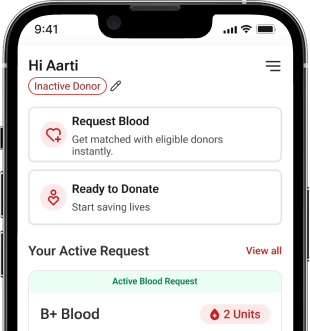
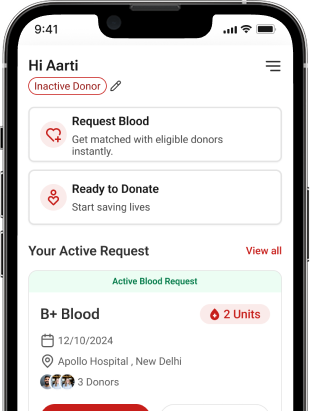
TheBloodApp is built specifically for this gap — reminding registered donors when they are eligible, alerting them when their blood type is urgently needed, connecting them to the nearest camp. The infrastructure of a national campaign is only as good as the individual donors who act on it repeatedly.
Register on TheBloodApp today — whether you donated during Raktdaan Amrit Mahotsav or never have. The record was set once. Your donation can be set again every 90 days for the rest of your eligible life. To find donation camps and blood banks near you across India, call the number listed in the app.
Sources: DGHS MoHFW — Blood Transfusion Services Achievements | The Print — Raktdaan Amrit Mahotsav World Record | Outlook India — Raktdaan Amrit Mahotsav | PIB India — Health Minister NVBDD 2022 | eRaktKosh MoHFW | WHO India Blood Safety 2024 | ORF — Securing India's Lifeblood
Stay informed, stay inspired — your go-to source for everything about blood donation and impact.

Had a drink last night? Planning to donate tomorrow? Here's how long to wait after drinking alcohol before donating blood in India — and why the rule exists.

रक्तदान करने से मरीजों की जान बचती है — लेकिन दाता को भी कई स्वास्थ्य लाभ होते हैं। हृदय स्वास्थ्य, कैंसर का कम खतरा, मुफ्त स्वास्थ्य जांच और भी बहुत कुछ।

Worried about blood group compatibility before marriage? ABO type has no bearing on it, but the Rh factor does matter in pregnancy. Here's the full picture.


Be a part of the change — donate safely, stay connected, and help someone in need. Download the app today.
Available on