
Voluntary blood donation in India did not begin as a national programme. It began in a single city, with a single woman. In 1954, Leela Moolgaonkar — inspired by the blood needs of her injured son — initiated the first voluntary blood donation drives in Bombay, now Mumbai. She went door to door, spoke at community meetings, and created what became one of India's earliest organised voluntary donor movements.
Seven decades later, Mumbai remains one of the most active blood donation cities in the country. It has over 58 functional blood banks across government, municipal, charitable trust, and private sectors. It has a long tradition of NGO-led donation drives, corporate participation, and community mobilisation. And it has some of the most severe blood demand pressures in India — driven by a population of over 20 million, a massive migrant worker base, and world-class hospitals that draw complex surgical cases from across Maharashtra and beyond.
Maharashtra has 273 registered blood banks — the highest of any Indian state. Of these, Mumbai alone accounts for 58 functional blood banks, of which 48 have component separation facilities.
The demand this infrastructure serves is enormous. Mumbai's major hospitals — KEM, Nair, Sion, Lokmanya Tilak (Sion), Wockhardt, Hinduja, Kokilaben Dhirubhai Ambani, Lilavati, and Tata Memorial Cancer Hospital — collectively serve tens of thousands of patients monthly. Tata Memorial alone, one of the country's foremost cancer treatment centres, has consistently high platelet and blood demand from oncology patients.
Maharashtra has also instituted a "Blood on Call" (Phone No. 104) service — a helpline to ensure easy access to blood supply across the state. This digital-physical integration is one of the more advanced blood coordination systems in India.
Government and Municipal:
Trust and NGO-run:
Private Hospital Blood Banks:
Apollo, Fortis, Wockhardt, Kokilaben Dhirubhai Ambani Hospital, Breach Candy, Lilavati, Jaslok, and Nanavati hospitals all operate their own blood banks.
Maharashtra's blood donation history sets it apart from many other states. The state has long been known for aggressive Information, Education, and Communication (IEC) activities — mass media campaigns, blood-grouping camps, appreciation of "centurion donors" (those who have donated 100+ times), and blood donation awareness rallies.
Mumbai's railway stations — Churchgate, CST, Dadar — have been used as registration points for prospective blood donors, reflecting the city's density and commuter culture. Camp organisers in Mumbai are familiar with the concept of on-the-go donor recruitment in a way that most Indian cities are not.
The city has also been a pioneer in rare blood type advocacy. Think Foundation and Sankalp Foundation are among the few Indian organisations that specifically maintain rare donor registries — including the extraordinarily rare Bombay blood group donors who can only receive blood from their own phenotype.
Mumbai does not have the same academic-calendar dependency as inland cities. Its large working population — in finance, textiles, manufacturing, entertainment, retail — means blood donation in Mumbai is somewhat less subject to the summer college-shutdown slump.
However, dengue season (July to October) creates an acute platelet crisis every year. Mumbai's dense housing, monsoon flooding, and large informal settlements make it one of India's highest-burden dengue cities. Platelet requests spike dramatically during this window, and hospital blood banks across the city struggle to keep SDP (Single Donor Platelet) stocks adequate.
The monsoon period itself also reduces camp-based donation, as outdoor venues become impractical and donor mobility drops. Blood banks in Mumbai typically experience stock stress from July to September annually.
All major blood banks in Mumbai accept voluntary walk-in donors during operating hours. Many operate 24/7, including on weekends. Calling ahead to confirm stock needs and operational hours is recommended.
Blood donation camps in Mumbai are organised year-round by:
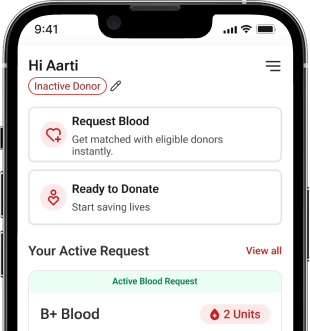
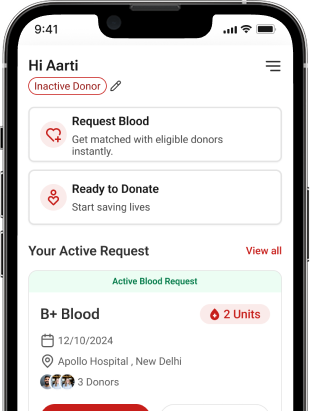
Register on TheBloodApp to receive urgent blood alerts for Mumbai and the MMR area. When a hospital anywhere in Mumbai urgently needs your blood type, you are notified immediately — whether you are in Andheri, Navi Mumbai, Thane, or Bandra.
Open TheBloodApp — submit an urgent blood request with blood type, component (whole blood/platelets/plasma), and hospital name. Registered donors in Mumbai matching your type are alerted immediately.
Call eRaktKosh — the national platform shows real-time blood stock at Mumbai blood banks. Filter by blood type and location.
Contact the Federation of Bombay Blood Banks — an established inter-bank coordination body connecting 47 blood banks in the city.
Call Think Foundation for rare blood types — particularly the Bombay blood group, which has a maintained informal registry in Mumbai.
Contact the nearest major blood bank directly — KEM, Nair, Sion, and JJ Hospital blood banks operate 24/7 and can advise on availability or direct you to facilities with stock.
To make an urgent blood request in Mumbai or find donation camps near you, call the number listed in the app.
Mumbai's contributions to Indian blood safety policy extend well beyond its own geography. Leela Moolgaonkar's 1954 initiative is often cited as the beginning of India's organised voluntary blood donation movement. The city's charitable trusts — which account for a majority of Maharashtra's blood collection — pioneered community-based donation models that have since been adopted elsewhere.
Mumbai's blood banks, particularly those associated with charitable trusts, were also early movers on NAT (Nucleic Acid Testing) and advanced TTI screening — technologies that significantly reduce transfusion-related infection risk. The city's long-standing association between the corporate sector and blood donation has made Mumbai a model for national CSR blood drive programmes.
Despite its strengths, Mumbai's blood system is not without gaps. The massive migrant worker population — living in chawls, slums, and informal settlements — is underserved by the current blood banking infrastructure that skews toward hospitals and formal institutions. Blood banks are distributed unevenly, with some areas well-served and others dependent on referrals to distant facilities.
The seasonal platelet crisis during dengue season remains acute every year. And like all Indian cities, Mumbai's long-term challenge is building a base of repeat voluntary donors rather than relying on event-driven one-time participation.
Download TheBloodApp, register as a Mumbai blood donor, and be ready when your city needs you. For urgent blood requests, donation camp listings, and connecting with blood banks in Mumbai and the MMR area, call the number listed in the app.
Sources: Maharashtra State Blood Transfusion Council (MAHASBTC) | Mumbai MDACS — Blood Safety | PMC — Blood Transfusion Services in Maharashtra and Gujarat | Wikipedia — Blood Donation in India | IRCS Maharashtra | Mediniz — Blood Banks Mumbai | WHO India Blood Safety Report 2024
Stay informed, stay inspired — your go-to source for everything about blood donation and impact.

Had a drink last night? Planning to donate tomorrow? Here's how long to wait after drinking alcohol before donating blood in India — and why the rule exists.

रक्तदान करने से मरीजों की जान बचती है — लेकिन दाता को भी कई स्वास्थ्य लाभ होते हैं। हृदय स्वास्थ्य, कैंसर का कम खतरा, मुफ्त स्वास्थ्य जांच और भी बहुत कुछ।

Worried about blood group compatibility before marriage? ABO type has no bearing on it, but the Rh factor does matter in pregnancy. Here's the full picture.


Be a part of the change — donate safely, stay connected, and help someone in need. Download the app today.
Available on