
Bengaluru has something that most Indian cities dream of for their blood donation programmes: a massive base of young, educated, health-conscious professionals who work in organised corporate environments with established CSR cultures.
The Rotary-TTK Blood Bank (Bangalore Medical Services Trust) — one of Karnataka's largest blood transfusion centres — collects over 40,000 units of blood annually through more than 450 voluntary blood donation camps each year. It has a voluntary donor base of over 5 lakh (500,000) registered donors. More than 600 IT companies, colleges, and organisations support its camps. Over 90% of its donors are young, between 18 and 35 years old, from the IT sector.
By any measure, Bengaluru is one of India's best-performing voluntary blood donation cities.
And yet, the demand still outpaces supply. The city serves over 12 million people, hosts one of India's densest concentrations of hospitals and medical institutions, and sees patient referrals from across Karnataka and neighbouring states. Blood is always needed — more than the current system consistently delivers.
In most Indian cities, the voluntary blood donation base is driven primarily by college students. In Bengaluru, the IT sector fundamentally shifts that equation.
Tech parks in Whitefield, Electronic City, Manyata, Outer Ring Road, and Hebbal are home to hundreds of thousands of young professionals — well-educated, generally healthy, and embedded in workplaces with organised CSR functions. This creates the most favourable conditions possible for sustained, year-round blood donation:
The BMST's data illustrates this: with over 600 IT companies as regular camp partners, Bengaluru has built a corporate blood donation ecosystem that few cities can match. Around 40% of its registered donors are repeat regular donors — a figure far above India's typical retention rate.
Rotary-TTK Blood Bank (Bangalore Medical Services Trust), Vasanth Nagar
The anchor of Bengaluru's voluntary blood system. Operating since 1984, BMST has grown from 5,000 units annually to over 40,000. It is accredited by NABH and certified to ISO standards. It conducts extended blood group typing (including minor blood groups and antibody screening) that most blood banks do not, making it particularly valuable for complex patients and multi-transfused thalassemia and sickle cell patients. It is a recognised Immunohematology Reference Laboratory for South India.
Victoria Hospital Blood Bank, Kalasipalya
A major government hospital blood bank serving central Bengaluru, with high-volume throughput and 24/7 availability.
Bowring & Lady Curzon Hospital Blood Bank
Government facility with NAT (Nucleic Acid Testing) capability — one of the few blood banks in Karnataka offering this higher standard of viral detection.
NIMHANS Blood Bank, Hosur Road
Serving the National Institute of Mental Health and Neurosciences — a significant neurosurgical centre with corresponding blood needs.
Bangalore Baptist Hospital Blood Bank
Established a private hospital with a well-run blood bank serving the northern parts of the city.
Indian Red Cross Society, Karnataka
Coordinates camp-based collection across Bengaluru and the state.
Sankalp India Foundation
A Bengaluru-based NGO that pioneered platelet apheresis awareness in India. Sankalp has been instrumental in establishing apheresis donation as a mainstream option for Bengaluru donors, particularly for oncology and dengue patients.
St. John's Medical College Hospital Blood Bank, Koramangala
One of the most respected private medical institutions in Karnataka, with a well-equipped blood bank serving its large patient base.
South Bengaluru (Jayanagar, JP Nagar, Banashankari, Electronic City):
Well-served by BMST camps at tech companies in Electronic City. Vydehi Medical College Blood Bank and Apollo Hospitals, Bannerghatta Road, also serve this belt.
North Bengaluru (Hebbal, Manyata, Yelahanka, Devanahalli):
Manyata Tech Park and other IT campuses in the north have regular CSR-driven donation camps. Fortis Hospital Hebbal and Columbia Asia (now Manipal) Yeshwanthpur serve the northern belt.
East Bengaluru (Whitefield, Marathahalli, Indiranagar, Old Airport Road):
Dense IT population in Whitefield and Marathahalli. Manipal Hospital, Old Airport Road, and Sakra World Hospital serve the east.
Central Bengaluru (MG Road, Shivajinagar, Rajajinagar):
Well-covered by Victoria Hospital, BMST, and several private hospital blood banks.
West Bengaluru (Rajajinagar, Vijayanagar, Tumkur Road):
M.S. Ramaiah Memorial Hospital serves this belt.
Bengaluru has a particular distinction in the history of platelet apheresis in India. Sankalp India Foundation, based in Bengaluru, was among the first organisations in India to pioneer and popularise single-donor platelet (apheresis) donation among IT professionals.
By systematically engaging corporate campuses, training donors, and demystifying the apheresis process, Sankalp built what became a model for platelet donor engagement across India. Their work demonstrated that IT professionals — given proper information and access — were among the most reliable platelet donors: willing to spend two hours in a chair, educated enough to understand the clinical value, and committed enough to repeat.
BMST's apheresis programme accepts donors weighing at least 55 kg — slightly lower than the 60 kg typical at many blood banks — and allows apheresis donors to donate twice a week, given the faster physiological recovery compared to whole blood donation.
Like all southern Indian cities, Bengaluru faces a dengue-driven platelet crisis every monsoon (July–October). The city's rapid urban expansion, with many newly developed areas lacking adequate drainage, has made dengue particularly endemic.
During peak dengue season, hospital blood banks across Bengaluru issue urgent platelet requests regularly. The turnaround time from request to transfusion can be the difference between recovery and hemorrhagic crisis in dengue patients.
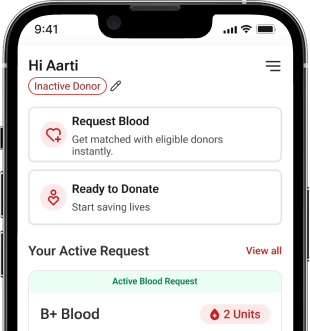
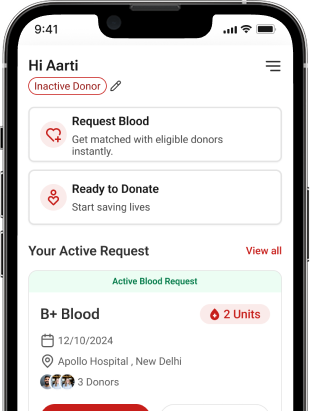
Registering as a platelet donor in Bengaluru — particularly with BMST or Sankalp — is one of the highest-impact voluntary actions a Bengaluru resident can take. Urgently needed platelet donors contacted through TheBloodApp can respond to hospital requests faster than any walk-in system.
Walk-In: BMST (Vasanth Nagar), Victoria Hospital, Bowring & Lady Curzon, and most major hospital blood banks accept voluntary walk-ins throughout the day, seven days a week.
Organised camps: Contact BMST's camp coordinator at their listed number, or connect through TheBloodApp to find upcoming donation camps in your area of Bengaluru.
Corporate drives: If your company does not run blood donation drives, BMST and Sankalp can partner with you to set one up. The process is straightforward, and the organisations are experienced at making it seamless for HR teams.
Platelet apheresis: Contact BMST or Sankalp directly for platelet donation appointments. Apheresis sessions are scheduled, require a pre-donation platelet count check, and take 1.5–2.5 hours.
To find donation camps or submit an urgent blood request in Bengaluru, call the number listed in TheBloodApp.
Sources: BMST Rotary-TTK Blood Bank Bangalore | Sankalp India Foundation — Platelet Apheresis | Wikipedia — Blood Donation in India | PMC — Voluntary Blood Donation India | WHO India Blood Safety 2024 | Bangalore Baptist Hospital Blood Bank | NIMHANS Bengaluru
Stay informed, stay inspired — your go-to source for everything about blood donation and impact.

Had a drink last night? Planning to donate tomorrow? Here's how long to wait after drinking alcohol before donating blood in India — and why the rule exists.

रक्तदान करने से मरीजों की जान बचती है — लेकिन दाता को भी कई स्वास्थ्य लाभ होते हैं। हृदय स्वास्थ्य, कैंसर का कम खतरा, मुफ्त स्वास्थ्य जांच और भी बहुत कुछ।

Worried about blood group compatibility before marriage? ABO type has no bearing on it, but the Rh factor does matter in pregnancy. Here's the full picture.


Be a part of the change — donate safely, stay connected, and help someone in need. Download the app today.
Available on